Exchange rate table
| Currency | Purchase | Sale |
|---|---|---|
| XCD Eastern Caribbean dollar |
1.26536 | 2.51536 |
Eastern Caribbean Dollar Exchange in Katowice
The Eastern Caribbean dollar is circulated in countries belonging to the Organization of Eastern Caribbean States. The banknotes circulating in these countries have a single design and differ only in the last letter of the banknote's serial number:
• Independent State of Antigua and Barbuda – A
• Niezależne Państwo Grenada – G
• Independent State of Grenada – G
• Island of Anguilla, maritime zone of Great Britain – U
• Independent State of Dominica – D
• Independent State of Saint Kitts and Nevis – K
• Montserrat Island, offshore Great Britain - M
• Independent State of Saint Vincent and the Grenadines – V
The British Virgin Islands, the ninth member of the Organization of Eastern Caribbean States, uses the US dollar. The Eastern Caribbean dollar, as the common currency of the Organization of Eastern Caribbean States, was introduced in January 1982. This was regulated by the terms of the Organization's establishment. The introduction of a single currency normalized the monetary situation in the region, as previously, many different currencies had been in circulation. The Eastern Caribbean Central Bank is responsible for issuing the dollar.
The East Caribbean dollar was originally pegged to the US dollar, and it's a relatively stable currency, as evidenced by the following fact: the initial peg has never changed. Today, as was the case thirty years ago, the EC$ is pegged at 2.7:1 to the US dollar.
EC$ exchange coins are minted in the USA and vary in shape and material:
• 1 cent - segmented-flake form, aluminum
• 2 cents - round shape, aluminum
• 5 groszy - round shape with an octahedron embossed in the outline, nickel-plated steel
• 10 cents - round shape, nickel-plated steel
• 25 cents - round shape, copper-nickel alloy
• 1 dollar - decahedron shape, copper-nickel alloy
The obverses of all coins feature the profile of Queen Elizabeth II of the United Kingdom, while the reverses display the face value within a decorative laurel wreath. The 10, 25, and 1 dollar coins from 2002 and 2004 feature the image of Vice Admiral Sir Francis Drake's sailing ship.
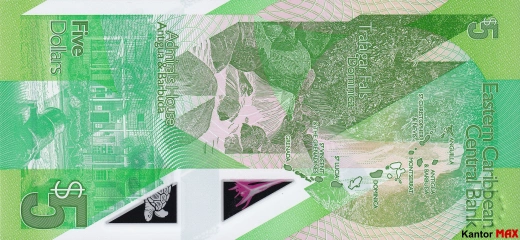
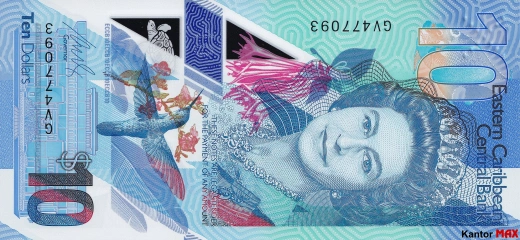
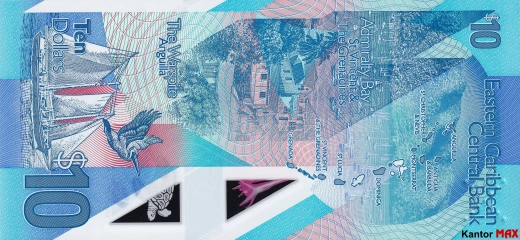
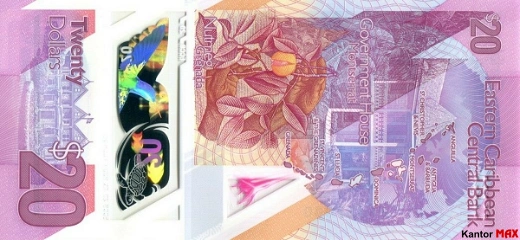
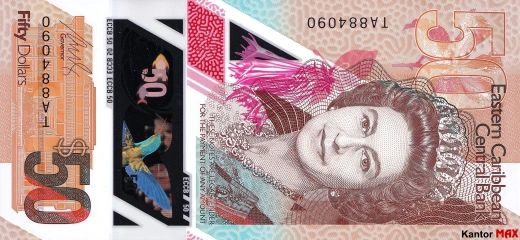
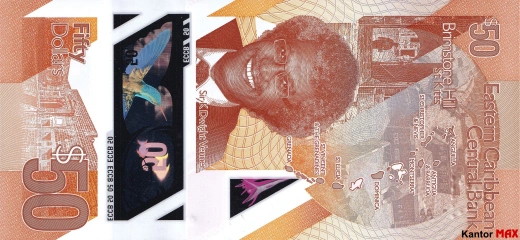
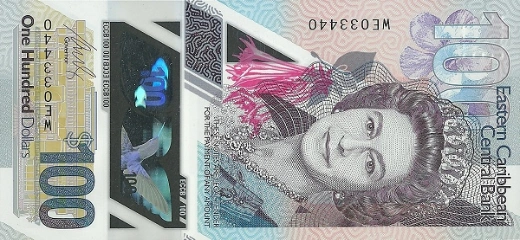
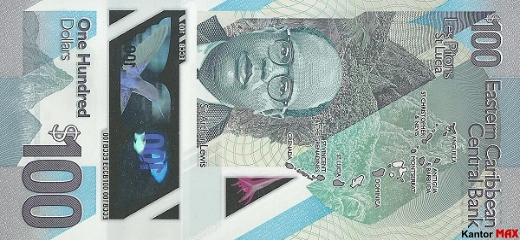
The $5, $10, $20, $50, and $100 banknotes are in circulation, all of the same design, differing only in the colors and reverse design. The obverse features a portrait of Elizabeth II, the formal head of state of all these territories, who governs them through appointed governors-general.
The image of the Organization's symbol, a sea turtle, also remains unchanged. The reverse of all banknotes (except the $100) features images of architectural monuments and flowers native to the islands. The $100 EC note features a portrait of economist Sir Arthur Lewis. EC$ banknotes are printed in the United States.
EC$ coins are also minted in the USA, they differ in shape and material:
• 1 cent - segmented-flake form, aluminum
• 2 cents - round shape, aluminum
• 5 groszy - round shape with an octahedron embossed in the outline, nickel-plated steel
• 10 cents - round shape, nickel-plated steel
• 25 cents - round shape, copper-nickel alloy
• 1 dollar - decahedron shape, copper-nickel alloy.
The obverses of all coins feature the profile of Queen Elizabeth II of the United Kingdom, while the reverses display the face value within a decorative laurel wreath. The 10, 25, and 1 dollar coins from 2002 and 2004 feature the image of Vice Admiral Sir Francis Drake's sailing ship.